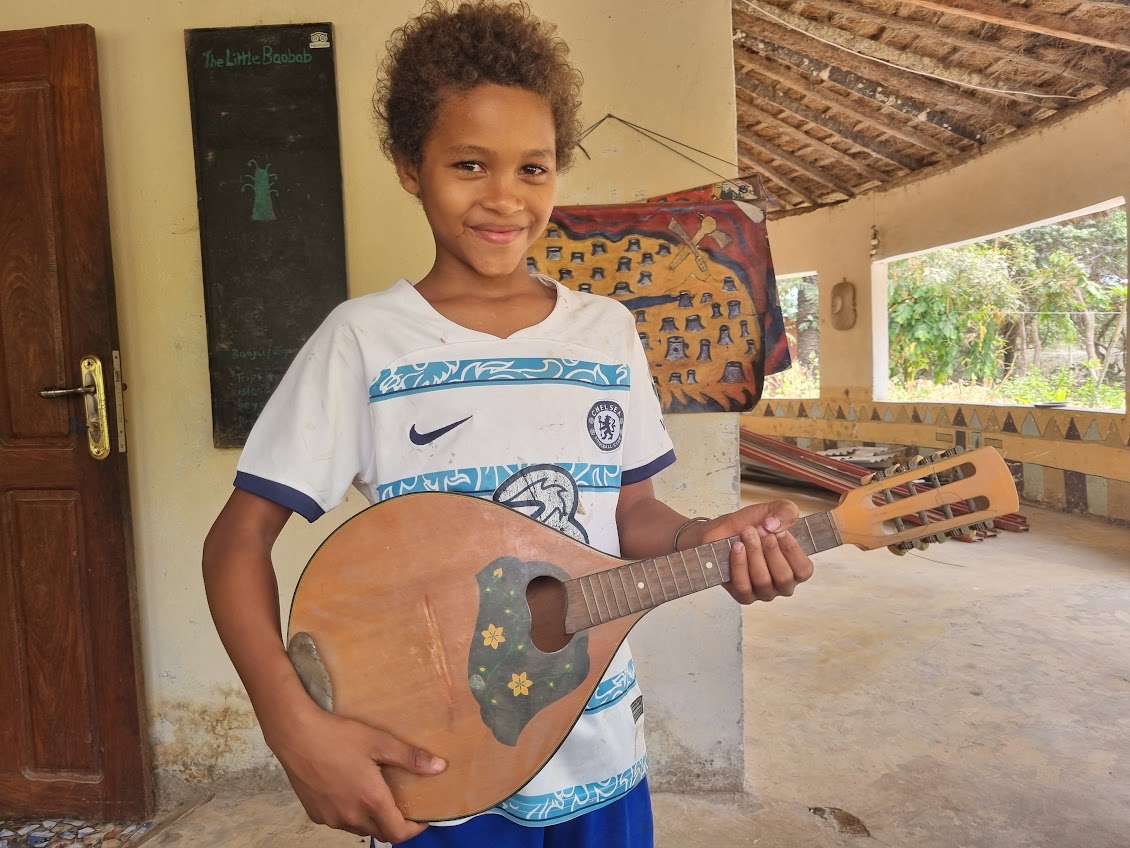
The book
Travels with My Mandolin
Travels with My Mandolin is a memoir of music, chance encounters, and restless journeys, told through the unlikely companion of a small mandolin.
Over more than a decade, the instrument travels through deserts, old European towns, island villages, railway stations, festivals, border crossings, hostels, beaches, bars and borrowed rooms. It opens conversations where language fails, turns strangers into temporary friends, and gives each place its own song.
This is not a conventional travel book. It is a personal map of memory: part road story, part musical pilgrimage, part search for connection. The mandolin becomes a passport of its own — small enough to carry anywhere, strange enough to invite curiosity, and warm enough to turn lonely places into human ones.
The journey ranges from the cold streets of Kraków to the sunlit alleys of Madeira, from the castles of Romania to the deserts of Jordan, from the cafés of Morocco to the forests and islands of Casamance. Some chapters are comic, some reflective, some full of music, grief, kindness or absurdity. Together they form a portrait of travel as it really happens: improvised, imperfect, sometimes uncomfortable, often beautiful, and always shaped by the people met along the way.
Extracts
From the chapters
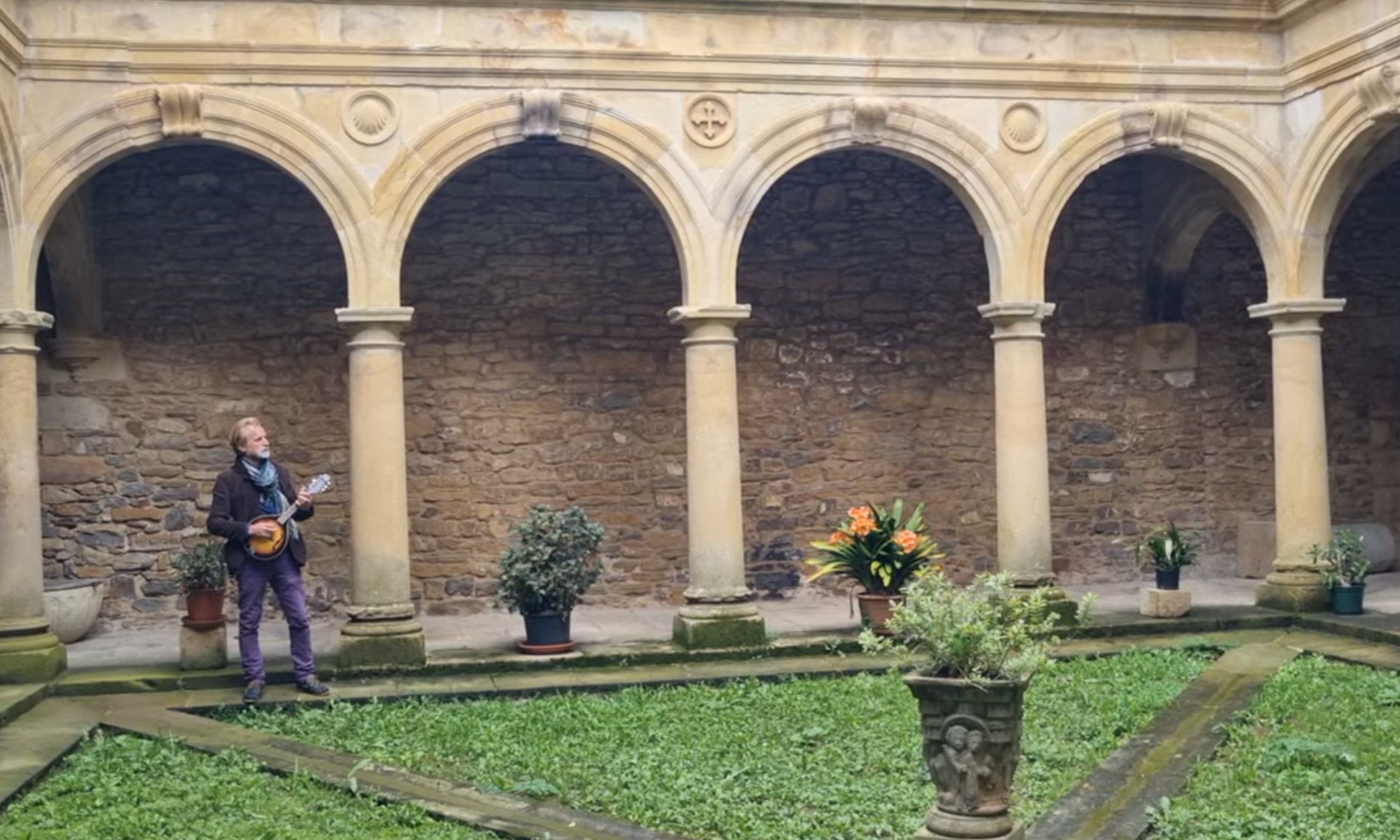
By the time I reached the Camino, I had stopped pretending that I knew exactly why I was walking.
At first, I told myself it was for the story: the noble, writerly idea of crossing northern Spain with a mandolin, gathering songs and fragments, collecting encounters like stamps in a passport. But after a few days, the road had stripped away most of that romance. There were blisters, damp socks, bad coffee, strange beds, and long stretches where the only thing to do was put one foot in front of the other and listen to the sound of my own breathing.
The mandolin was ridiculous luggage for a pilgrim. Everyone else seemed to have learned the sacred art of travelling light, while I had brought a small wooden companion with strings, curves, and opinions. It knocked against my back, caught on doorways, and made people stare. But it also gave me a reason to stop.
In the evenings, when the walking was done and the pilgrims gathered in bars, courtyards, hostels, and village squares, the mandolin began to make sense. Someone would ask what it was. Someone else would tell me about a song from home. A Spanish guitarist would lean over and try a chord. A German walker would hum something half-remembered. A woman who had walked all day in silence would suddenly sing.
The Camino was not only a road across Spain. It was a road through other people’s private burdens. Grief walked there. Divorce walked there. Illness, retirement, boredom, faith, loneliness and foolish hope all walked there, disguised as waterproof jackets and walking poles. The mandolin did not solve any of it. But now and then, in the corner of a tired room, it made the burdens visible, and for a few minutes lighter.
I began to understand pilgrimage not as arrival, but as repetition. Wake, walk, ache, eat, sleep. Wake, walk, ache, eat, sleep. The music came in the spaces between those repetitions, like a small fire struck in the dark.
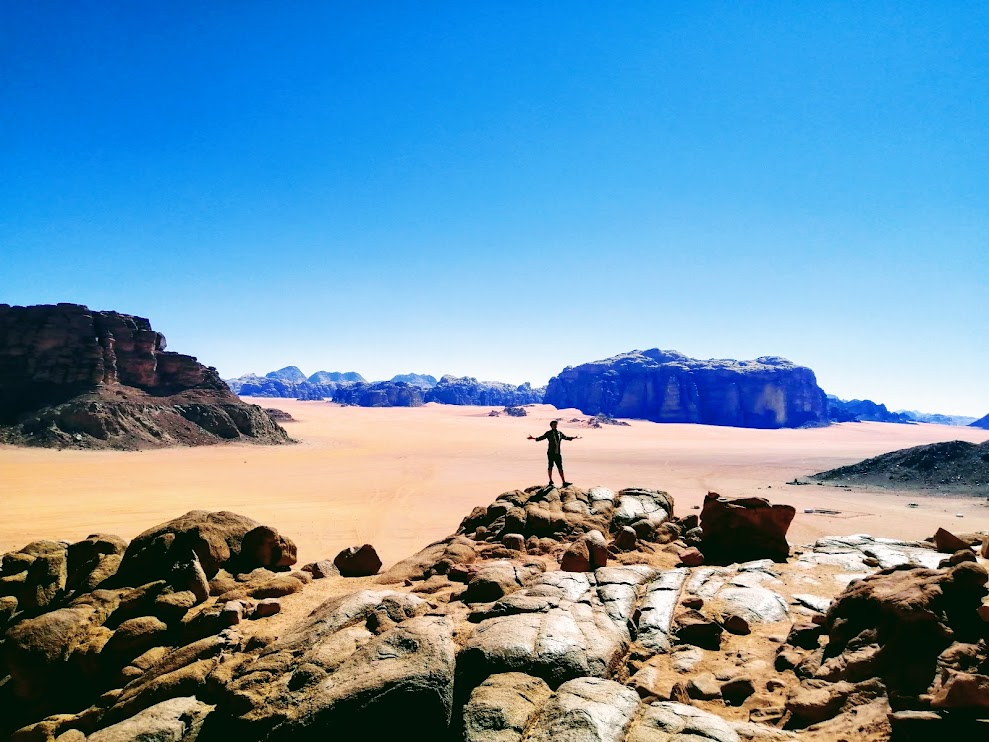
Wadi Rum made the mandolin feel very small.
Everything there was too large for ordinary description: the red cliffs rising like ruined cathedrals, the empty sand, the silence that seemed not like an absence of noise but a presence of its own. I had carried the mandolin through cities, airports, trains, hostels and bars, but in the desert it became almost comic — a little polished wooden thing under a sky that had no interest in human scale.
The jeep took us out across the sand, past rocks shaped by wind into towers, faces, bridges and beasts. The light changed constantly. At one moment the cliffs were bronze, then purple, then black against the sun. I remember thinking that music had probably begun in places like this, not in concert halls, but around fires, under impossible skies, when people needed a way to answer the dark.
That evening, in the camp, the desert cooled quickly. The heat went out of the sand and the stars came forward one by one until the sky seemed overcrowded with them. There was tea, smoke, blankets, and the low murmur of people talking in several languages. I took out the mandolin with the usual mixture of hope and embarrassment.
It sounded thin at first, almost absurdly delicate. The notes disappeared upward into all that space. But then something changed. The desert did not swallow the sound; it made room for it. A few notes, a simple rhythm, nothing impressive — and yet in that place, smallness became the point. The mandolin did not compete with Wadi Rum. It confessed to it.
I played quietly. Someone listened. Someone smiled. Perhaps that was enough.
In the desert, I felt the journey become less about performance and more about offering. A tune did not have to be clever. It only had to exist for a moment between the fire, the sand, and the stars.
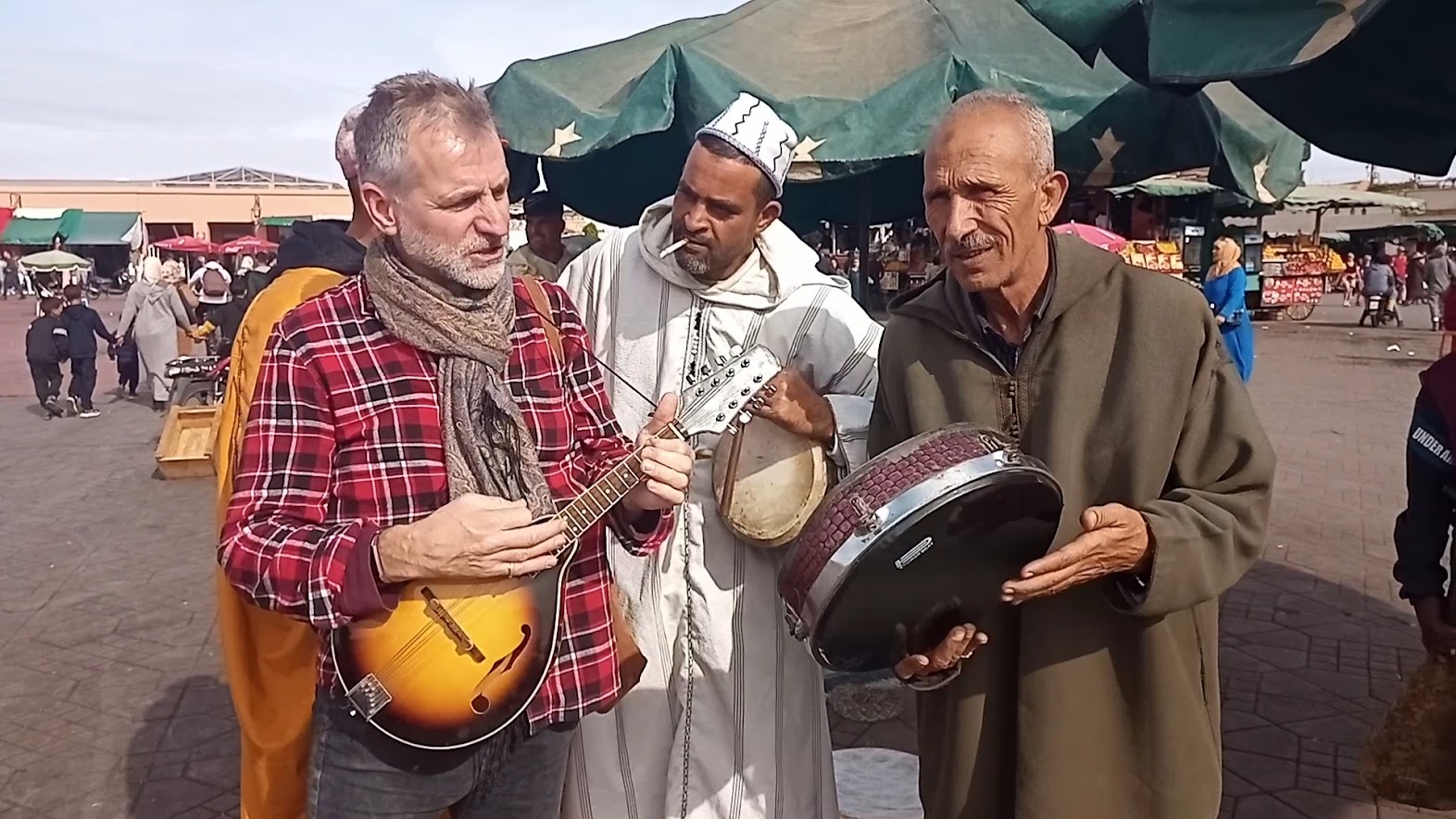
Marrakesh did not arrive gently.
It came at me in motorbikes, drums, bargaining voices, spice dust, orange peel, diesel fumes, roof terraces, cats, lanterns, alleys that doubled back on themselves, and the constant feeling that I had just missed the correct turning. The medina was less a place than a current. You did not walk through it so much as get taken by it.
I had the mandolin with me, which was either brave or stupid. Probably both.
In the square, music was everywhere, but not the polite kind of music that waits to be introduced. It came from drums, metal castanets, pipes, voices, radios, snake charmers, wedding bands, boys with rhythms in their hands, and old men who looked as if they had been playing the same pattern since before I was born. The mandolin suddenly seemed very European, very small, very well-behaved. Marrakesh had no need of it.
And yet that was what made it interesting.
The first time someone noticed it, the reaction was not admiration exactly. It was curiosity, then amusement, then negotiation. What was this little guitar? Where had I brought it from? Could it play Moroccan music? Could I play Moroccan music? No, obviously not. But I could try, and trying was often enough to begin something.
The rhythms pulled against me. They did not sit neatly where I expected them to sit. They circled, tightened, repeated, insisted. I was used to songs that travelled in lines; this music travelled in spirals. It did not ask the mandolin to lead. It asked it to surrender.
That was the lesson of Marrakesh: stop trying to be interesting and listen. The city was already interesting enough. The square, the Gnawa pulse, the clatter of tea glasses, the shouting, the laughter, the sudden tenderness of strangers — all of it was already playing. My task was not to impose a tune on it, but to find the small place where my instrument could enter without breaking the spell.
Some nights I failed. Some nights I was tired, cheated, dazzled, irritated, overcharged, underfed, and ready to retreat to a room with a locked door. But then a rhythm would begin somewhere nearby, and the city would open again.
Marrakesh did not give me peace. It gave me trance, confusion, colour, and the strange mercy of being absorbed into something louder than myself.